
How Brand Identity Design Works as a System
Brand identity design is the intentional system that turns strategic direction into coordinated identity elements, usage rules, and applications. A logo is one component, while visual identity is the visual expression within the broader system and brand perception is the audience’s interpretation. The system works when its cues stay coherent across touchpoints while approved variations adapt to format, scale, medium, and context.
Brand identity design system at a glance
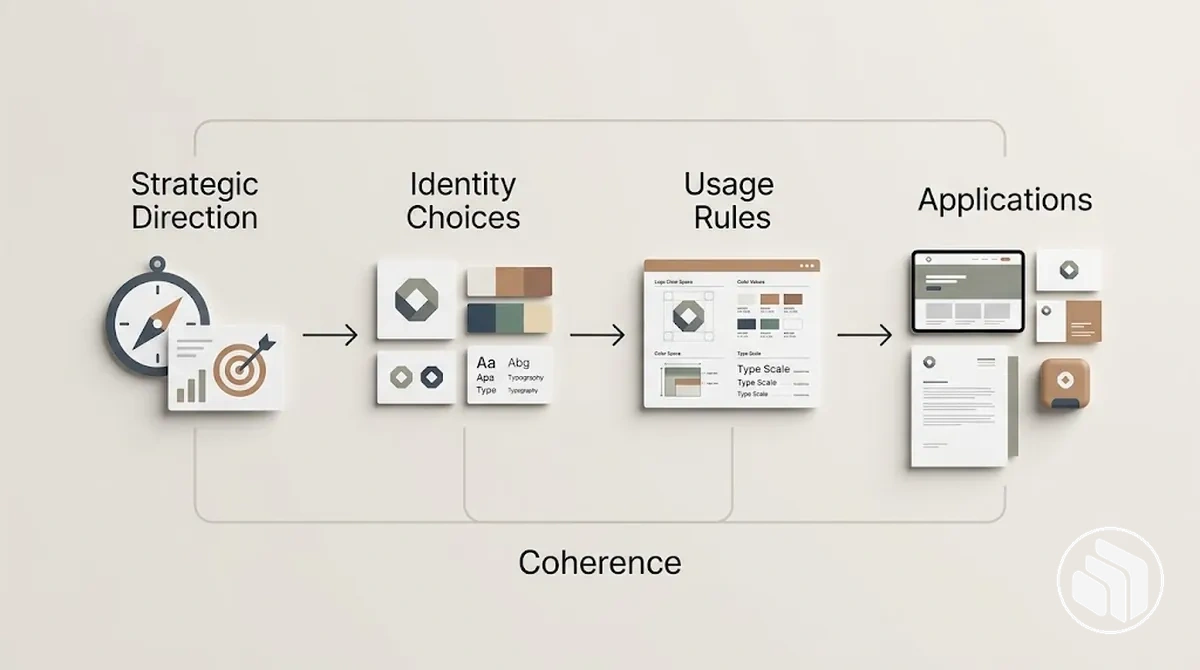
The system connects four dependent layers. Each layer has a different role, and coherence comes from keeping the decisions aligned as the identity moves from intent to real applications.
- 1Strategic directionPurpose, audience, positioning, personality, differentiators, and practical constraints set the criteria for design decisions.
- 2Identity elementsLogo, colour, typography, imagery, graphic language, and relevant verbal cues turn those criteria into repeatable brand cues.
- 3Usage rulesApproved variants, spacing, colour roles, type hierarchy, imagery treatment, and adaptation conditions define how the elements may be used.
- 4ApplicationsWeb, mobile, print, and other touchpoints apply the system. Consistency means coherent adaptation, not identical execution in every format.
Visual identity: the visual expression inside the broader brand identity system.
Brand perception: the audience’s interpretation of those cues; design can influence the cues presented but cannot directly control that interpretation.
Table of Contents
What Brand Identity Design Is
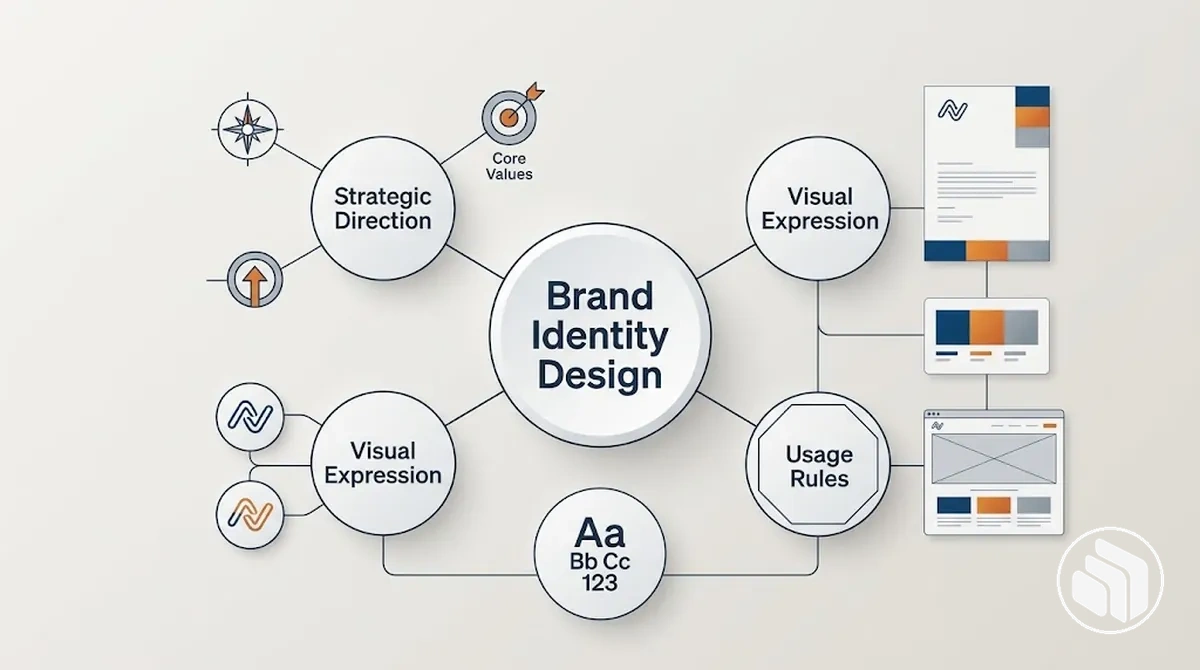
Brand identity design is the intentional design of an identity system that translates strategic direction into coordinated expression and rules for consistent application.
- Brand identity design
- The broader designed system: strategic direction, identity elements, and the rules that coordinate how those elements are applied. The exact component set varies by brand and context.
- Logo
- One identity element and recurring visual cue. A logo can identify the brand visually, but it is not the complete identity system on its own.
- Brand perception
- How audiences interpret the brand through encounters and context. Identity design can shape the cues presented, but it cannot directly control audience interpretation.
The Purpose of Brand Identity Design
The purpose of brand identity design is to express a brand’s intended character through distinctive, coherent, and repeatable cues.
- Differentiation
- Distinctive cues help separate the brand’s expression from competing or neighbouring identities.
- Consistency
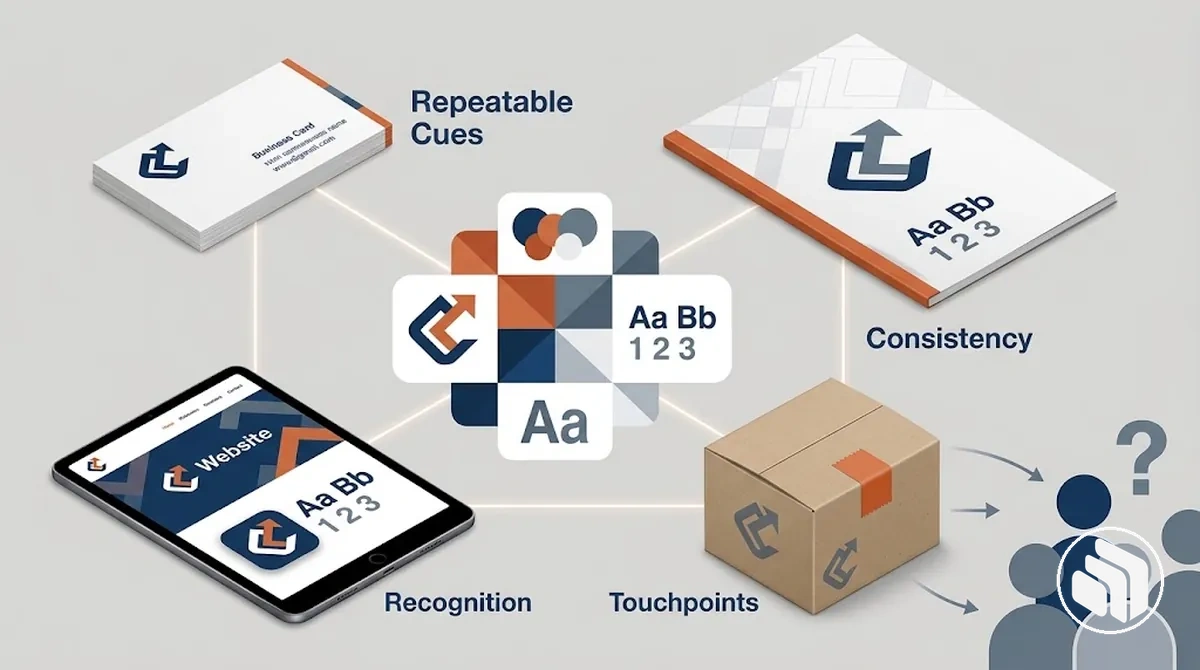
- Shared rules keep core cues recognisable across touchpoints while allowing approved variations for different formats and contexts.
- Recognition support
- Repeated exposure to coherent cues can make the identity easier to recognise, although audience interpretation still depends on context and perception.
For example, repeating the same core colour treatment, typography, and visual language across several applications can make the intended character easier to recognise from one touchpoint to another. This is why brand identity consistency depends on coherent application rather than arbitrary repetition.
The Scope of a Brand Identity Design System
The brand identity design system includes the strategic inputs, identity elements, usage rules, and applications that shape the designed identity. Verbal cues may also belong within the system when they are intentionally coordinated with its visual expression.
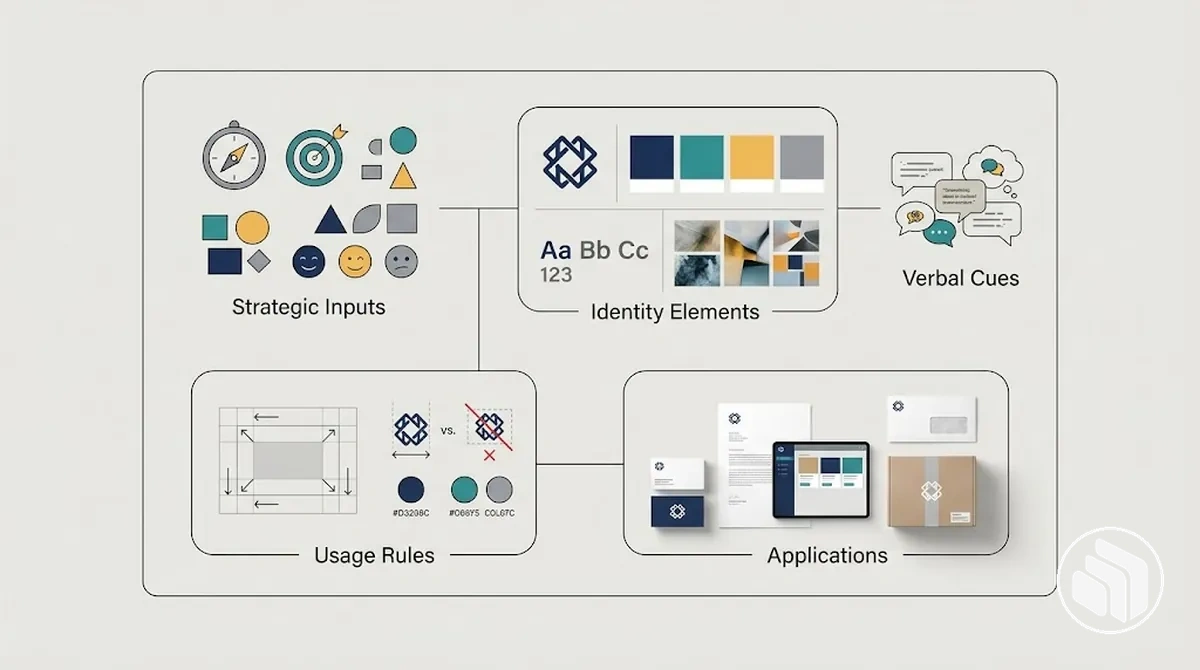
- Strategic inputs: positioning, personality, and related design criteria that inform identity decisions.
- Identity elements: core visual elements such as logo, colour, typography, and imagery.
- Verbal cues where relevant: language or expression cues when they form part of the coordinated identity.
- Usage rules and applications: guidance for applying and adapting identity elements coherently in relevant contexts.
This system scope is distinct from a commercial scope of work, which may describe project deliverables, pricing, or implementation activities. Visual identity is narrower because it concentrates on visual expression rather than the full set of strategic inputs, identity components, and usage rules.
Where Visual Identity Fits Within Brand Identity Design
Visual identity is the visual expression within the broader brand identity system, not the whole of brand identity. Its strategic basis comes from the wider system, while its application uses cues such as a logo, colour, typography, imagery, and graphic language.
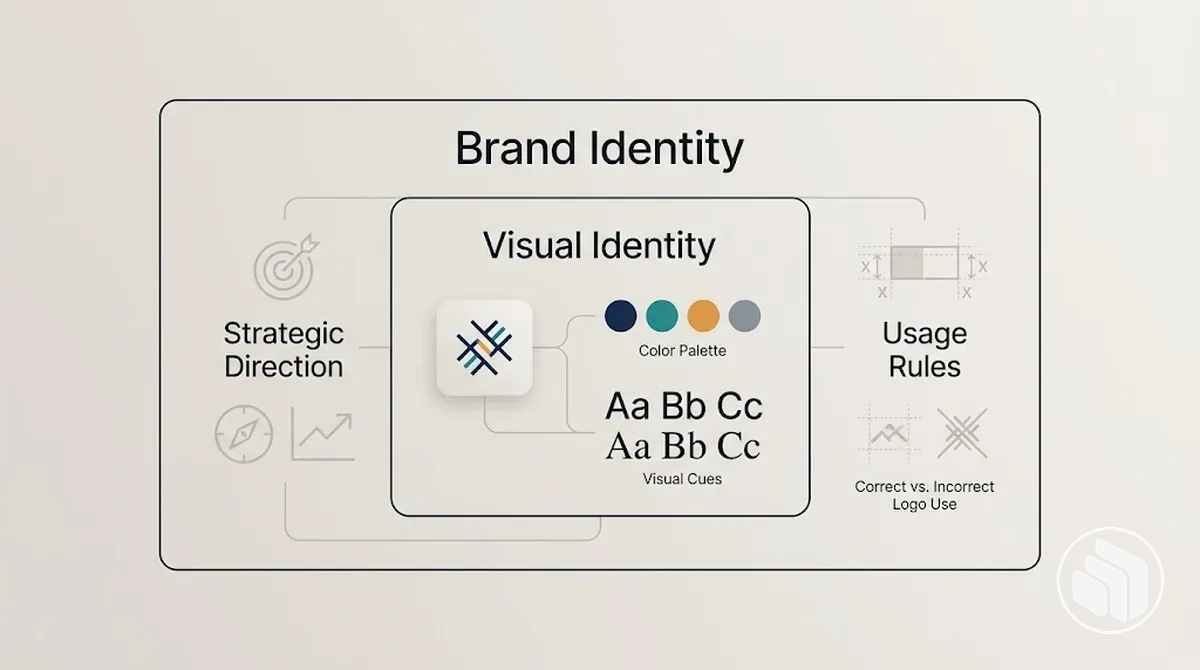
The distinction between brand identity and visual identity is therefore one of scope: strategic direction and usage rules belong to the broader system, while visual identity expresses that direction through visual elements.
Core Identity Elements and Their Roles
Core identity elements are coordinated components with different functions inside one brand identity system. Together, they provide recurring visual cues that support coherent expression across applications.
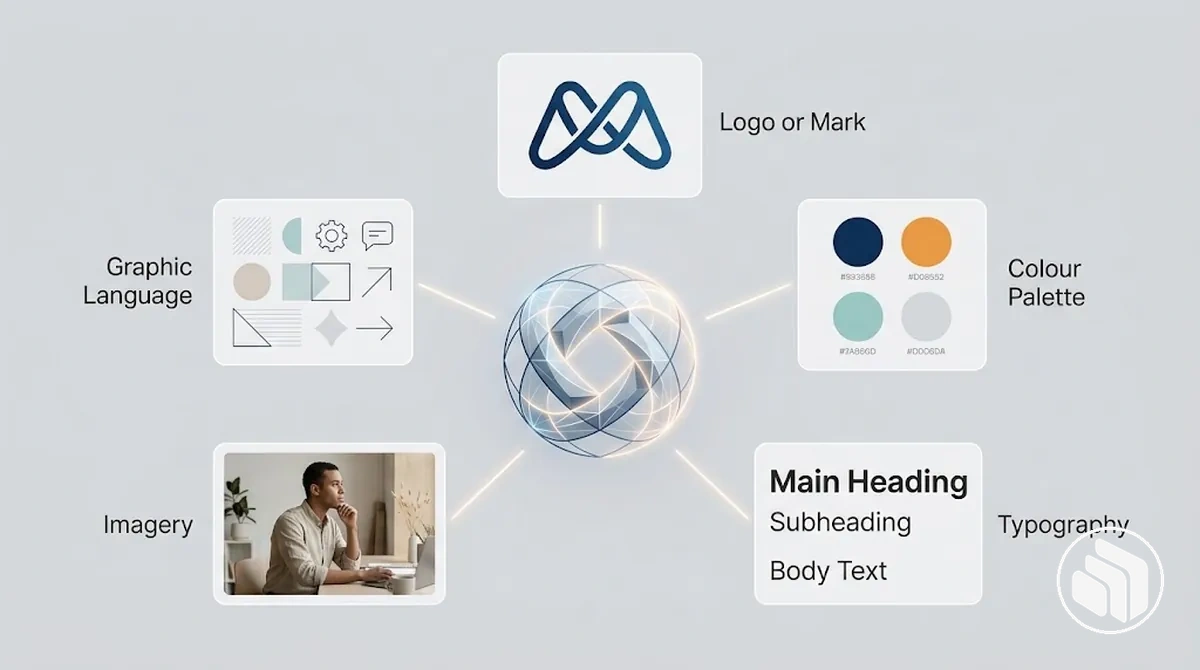
- Logo or mark: identifies the brand visually and provides a recurring recognition cue.
- Colour palette: defines colour roles that support consistency across repeated applications.
- Typography: organizes textual hierarchy and contributes a consistent character to written expression.
- Imagery: establishes a recurring approach to photography, illustration, or other image-based expression.
- Graphic language: uses recurring shapes, patterns, icons, or design cues to support system coherence.
The list is representative rather than universal: the exact component set depends on the brand and the contexts in which the identity must operate.
How the Parts of a Brand Identity System Work Together
A brand identity system works through dependencies: strategic direction informs identity choices, those choices are formalised through usage rules, and the rules guide applications. Coherence depends on alignment between those layers rather than on treating visual assets as isolated outputs.
Brand identity design principles provide criteria for keeping identity decisions coherent with the intended direction.
What changes the result
Broader causes of inconsistent brand identity can extend beyond this dependency example.
Strategic Direction Defines What the Identity Must Express
Strategic direction supplies the design criteria against which later identity decisions are evaluated. It defines what the identity should express without dictating one exact visual solution or finished aesthetic.
- Purpose
- Clarifies what the identity needs to represent and the role the brand intends to play.
- Audience and positioning
- Frame the context in which the identity must communicate and how the brand seeks to be distinguished.
- Personality and differentiators
- Provide attributes that can guide the tone and character of visual and verbal expression.
- Practical constraints
- Narrow design choices according to real application needs such as format, medium, scale, and operational use.
Documenting these inputs in a brand identity brief gives designers explicit criteria for evaluating later choices while leaving room for different visual solutions that satisfy the same strategic direction.
Identity Elements Translate Direction Into Recognisable Cues
Identity elements translate selected brand attributes into visual cues through colour, typography, logo form, imagery, and graphic language.
For example, restrained typography may support a formal intended signal in one context, while imagery, colour, and graphic language can shift how the same typography is perceived. The meaning therefore emerges from the combined system and its application rather than from fixed symbolism in a single element.
Usage Rules Make the Identity Repeatable Across Applications
Usage rules define how approved identity elements are applied under different conditions. They specify permitted uses, restrictions, and adaptations so the system can remain repeatable without requiring every context to look identical.
Approved variation is useful when format, scale, medium, or application needs change. When building brand guidelines, the rules should document both the intended treatment and the conditions under which a variation is appropriate.
- Logo variants: specify which approved version suits a particular background, format, or available space.
- Spacing: defines the clearance or placement conditions needed to keep the logo visually distinct.
- Colour roles: specify how approved colours function across backgrounds, emphasis, and supporting applications.
- Typography hierarchy: guides type roles for headings, body text, and other recurring information levels.
- Imagery treatment: defines recurring visual characteristics while permitting suitable subjects and compositions to vary by context.
- Adaptation: permits approved adjustments when application constraints require flexibility while maintaining consistency with the identity system.
How the System Develops from Strategy to Guidelines
The brand identity system develops through a high-level sequence that turns strategic inputs into tested identity decisions and documented rules. The exact workflow can vary with project scope and existing brand maturity; the fuller brand identity design process covers the procedural detail.
- Research and discovery: examine the brand, audience, context, and existing identity to establish relevant inputs.
- Strategic definition: define the criteria and brand attributes that provide direction for later design decisions.
- Design direction: translate strategic criteria into an intended visual direction that guides identity development.
- Identity element development: develop and refine identity elements so they operate as a coordinated visual system.
- Application testing: test identity elements in representative applications to identify where refinement or adaptation is needed.
- Guidelines: document approved elements, usage conditions, and application rules as the sequence's practical output.
Guidelines are the practical output of earlier decisions: they formalise approved elements, conditions, and rules; they do not create the identity on their own.
Examples of Brand Identity Design as a Connected System
Each example shows how brand identity design connects strategic intent, identity elements, usage rules, and application within a specific context.
Adapting one identity across formats
- Situation
- The same identity must work in a wide website header and a compact mobile icon.
- System response
- Strategic intent stays stable while approved logo variants and spacing rules adapt the identity to available space.
- Result
- Coherence comes from controlled adaptation, not from forcing identical execution in every format.
Coordinating visual cues across changing content
- Situation
- Photography changes subject from one application to another while the brand needs a consistent visual character.
- System response
- Colour, typography, and imagery treatment repeat selected cues while rules allow individual images to vary with context.
- Result
- Applications can remain recognisably related without requiring every composition to be identical.
Resolving fragmented application
- Situation
- Different touchpoints use conflicting logo treatments, typography, and colour roles without shared rules.
- System response
- Approved variations and application conditions coordinate those elements while retaining necessary flexibility.
- Result
- Greater consistency reflects alignment within the identity system; it does not guarantee a particular audience response.
Across these scenarios, brand identity design functions as a connected system when coordinated decisions remain adaptable to their application conditions.